Waterproofing
Concrete expansion joint sealing
Select one sealant for the service environment, design the joint cross-section with backer rod to avoid three-sided adhesion, then apply to clean, dry joint faces. 500Flex and PS410 are alternatives, not layers in one joint.
Public technical guidance
This page is selection and sequencing guidance, not a project method statement. The current product TDS, approved design, site assessment and trial application take precedence; structural anchors, cracks, water-retaining structures and other safety-critical work require qualified technical review.
Applicable for
- Thermal expansion joints and through-ceiling, through-wall movement joints
- Contraction/settlement joints in basements, subway tunnels and pipelines
- Cracks and floor/wall penetration holes
- Industrial concrete floors and indoor/outdoor car parks
- Concrete drainage/irrigation channels, dams and water reservoirs
- Bridge and road deck slabs, retaining walls, rooftop terraces, taxiways and runways
Bestmix material system
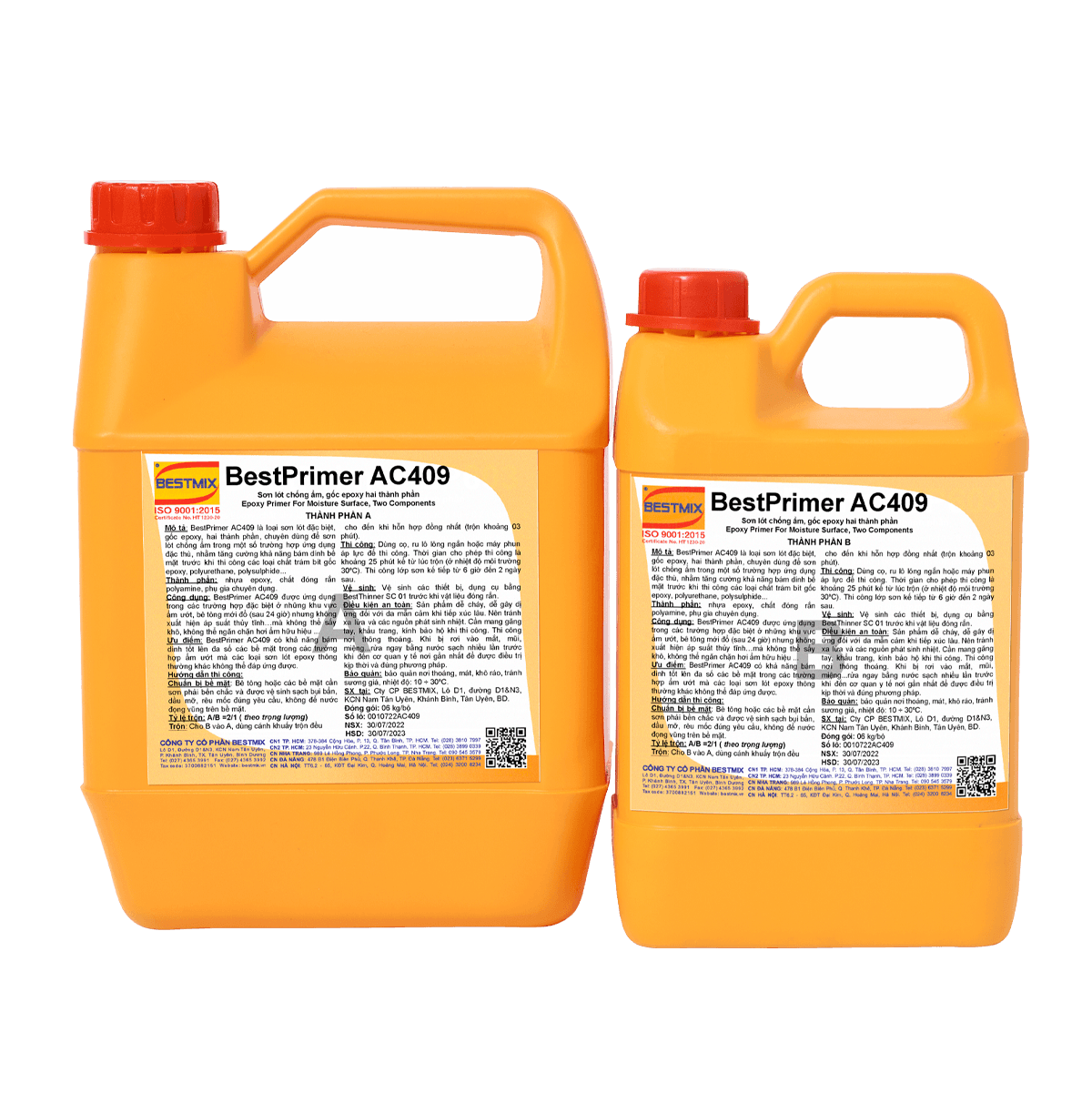
BestPrimer AC409
Optional two-component epoxy primer for weak substrates, residual moisture, large movement or where required by the TDS
Consumption: Optional; about 0.10 – 0.25 kg/m² of primed surface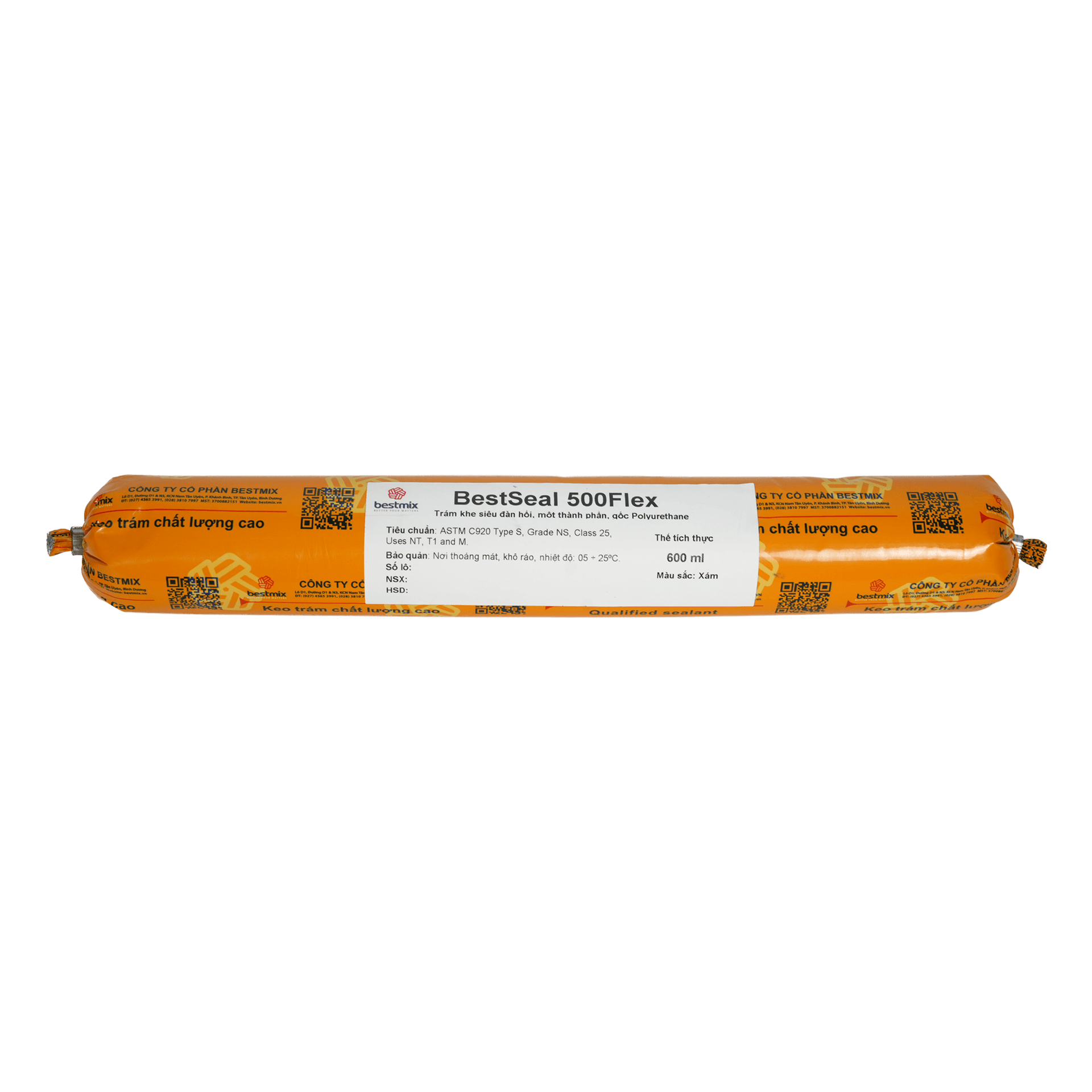
BestSeal 500Flex
Option A: one-component polyurethane for dry 10–40 mm joints; not for prolonged immersion or high water pressure
Consumption: By joint cross-section; width:depth normally 2:1 under the TDS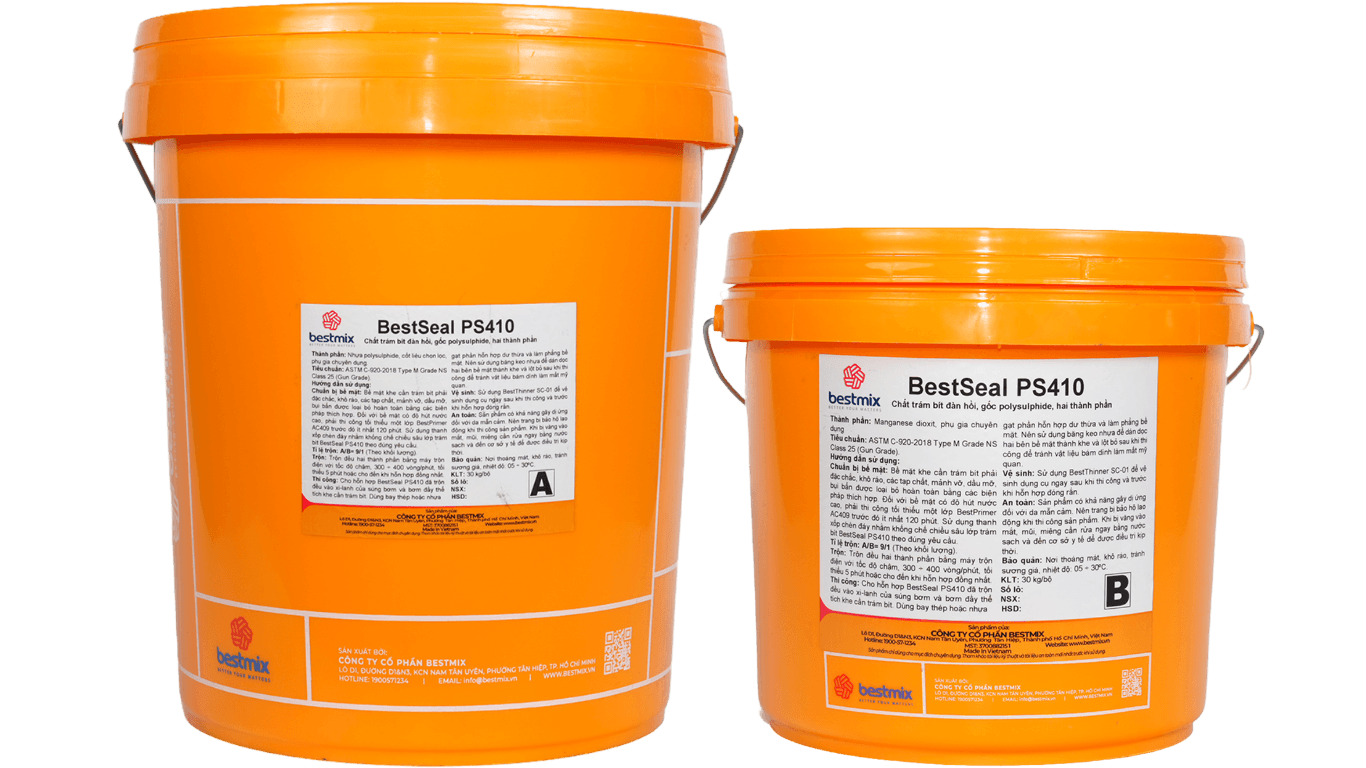
BestSeal PS410
Option B: two-component polysulphide for joints requiring suitable water/chemical resistance
Consumption: By joint cross-section; mix A:B = 9:1 by weightSubstrate requirements
- Substrate must be dry and free of dust, contaminants and oil; remove cement laitance and poorly bonded old paint
- Joint design must define movement, width, depth and movement capability; BestSeal 500Flex is for 10–40 mm joints with width:depth normally 2:1
- Use a compatible backer rod to control depth and prevent sealant adhesion to the joint base
- Use BestPrimer AC409 only where the TDS, adhesion trial or substrate condition requires it; PS410 surfaces must be dry
Step-by-step procedure
- 1
Cut/chase the joint
Cut or chase the expansion joint to achieve the joint width specified in the design.
- 2
Clean the joint
Use high-pressure compressed air or an industrial vacuum to remove all dust and debris from inside and around the joint.
- 3
Install backer rod
Press a backer rod firmly into the joint bottom, ensuring the correct sealing depth per design.
- 4
Mask joint edges
Apply masking tape along both sides of the joint to protect the surface and form a clean sealant line.
- 5
Assess and prime if required
Complete an adhesion trial and check the selected sealant TDS. Apply BestPrimer AC409 to both joint faces only where required by the substrate or service condition, following its mix ratio and overcoat window.
- 6
Gun the sealant
Select one sealant: load one-component BestSeal 500Flex directly into the gun, or mix BestSeal PS410 at A:B = 9:1 by weight before loading. Work within the primer window if used, gun continuously for full contact with both faces, avoid air and prevent three-sided adhesion.
- 7
Remove tape & clean
Peel off the masking tape while the sealant is still wet and clean off any material remaining on the surface.
- 8
Inspect & cure
Inspect adhesion, surface profile and defects. Protect the joint from water, dust and excessive movement, and open it to service only after the skin/cure time in the selected sealant TDS under actual conditions.
Consumption depends on joint width × depth × length, with backer rod controlling depth. Select one sealant for the service environment; BestPrimer AC409 is conditional, not automatic.
Common questions
Should I choose BestSeal 500Flex or BestSeal PS410 for expansion joints?
BestSeal 500Flex is a single-component polyurethane sealant, fast to apply with a caulking gun and suited to indoor and outdoor movement joints in well-ventilated areas; note it should not be used for swimming pools or areas under high water pressure or prolonged immersion. BestSeal PS410 is a two-component polysulphide sealant with high elasticity and strong adhesion to many materials (concrete, stone, metal, glass, PVC...), ideal for channel, dam and reservoir joints and through-ceiling expansion joints.
How is joint sealant consumption calculated?
Consumption is based on joint width × depth × length. Backer rod maintains the design depth and prevents three-sided adhesion. Use AC409 primer only where the TDS, adhesion trial or substrate condition requires it.
How long before the structure can be put into service?
Timing depends on the selected sealant, temperature, joint cross-section and whether primer is used. Open only under the current TDS skin/cure time; PS410 must be applied within the mixed material's working life.
Need advice for your project?
Bestmix engineers help you choose the right system and consumption — free of charge.