Industrial flooring
Self-levelling epoxy flooring for factories & plants
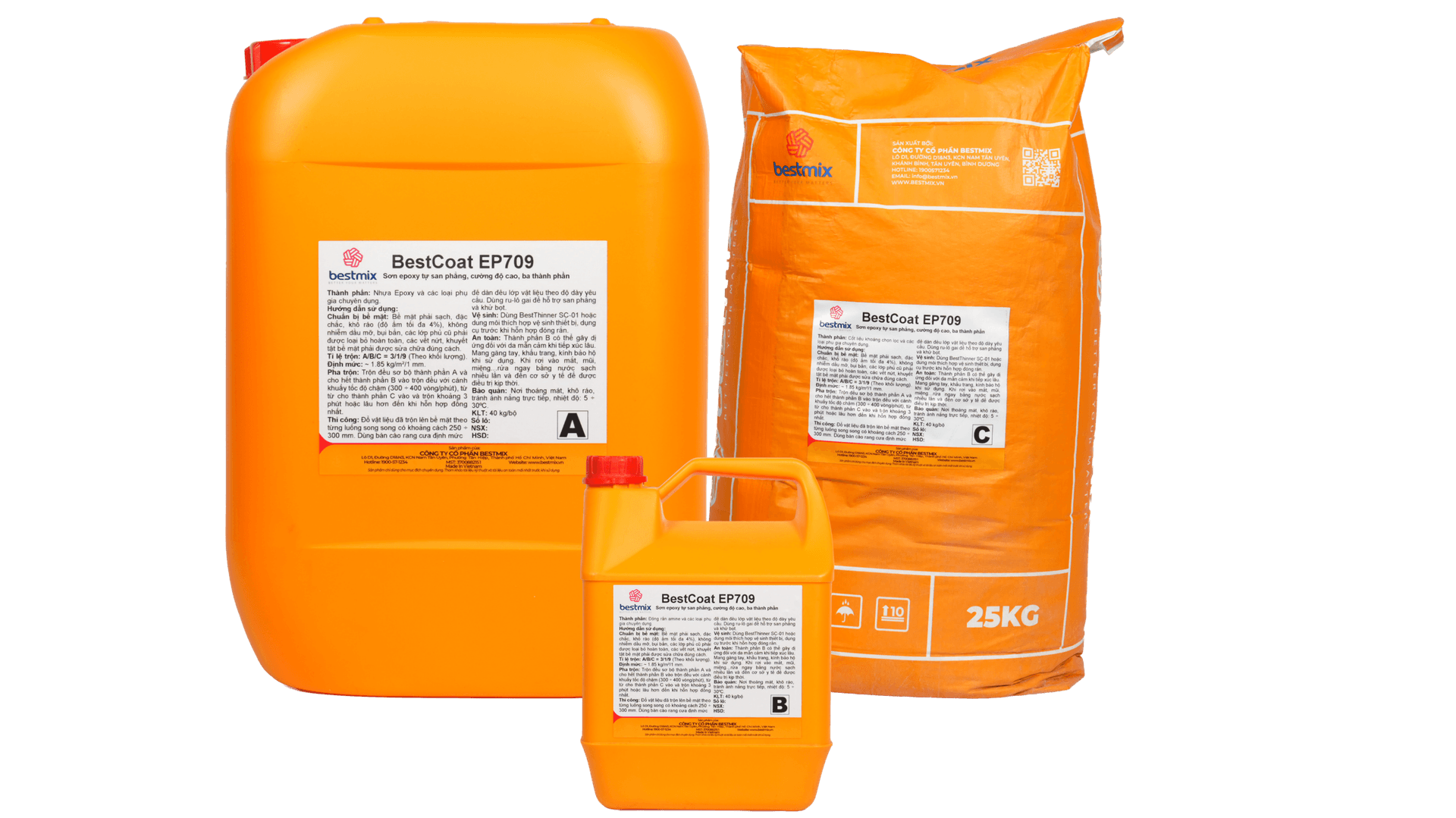
BestCoat EP709 is a solvent-free, high-strength self-levelling epoxy with optimal gloss — creating an ultra-flat, high-load floor for demanding production environments.
Public technical guidance
This page is selection and sequencing guidance, not a project method statement. The current product TDS, approved design, site assessment and trial application take precedence; structural anchors, cracks, water-retaining structures and other safety-critical work require qualified technical review.
Applicable for
- Cleanrooms, hospital operating rooms, laboratories
- Pharmaceutical, veterinary and biological plants
- Food, seafood, agricultural and textile plants
- Electronics, optics and precision-instrument assembly plants
- Car parks, auto repair & assembly workshops, aircraft hangars
Substrate requirements
- Ground-contact slabs require a continuous, sealed and properly designed vapour-control system
- Concrete compressive strength at least 20 MPa and pull-off tensile strength at least 1.5 MPa, with the design curing age achieved
- Substrate moisture must meet the selected primer TDS and be tested with a method suitable for concrete slabs
- Resolve cracks, defects and contamination before coating; mechanically profile and vacuum the surface
Step-by-step procedure
- 1
Assess the slab and moisture
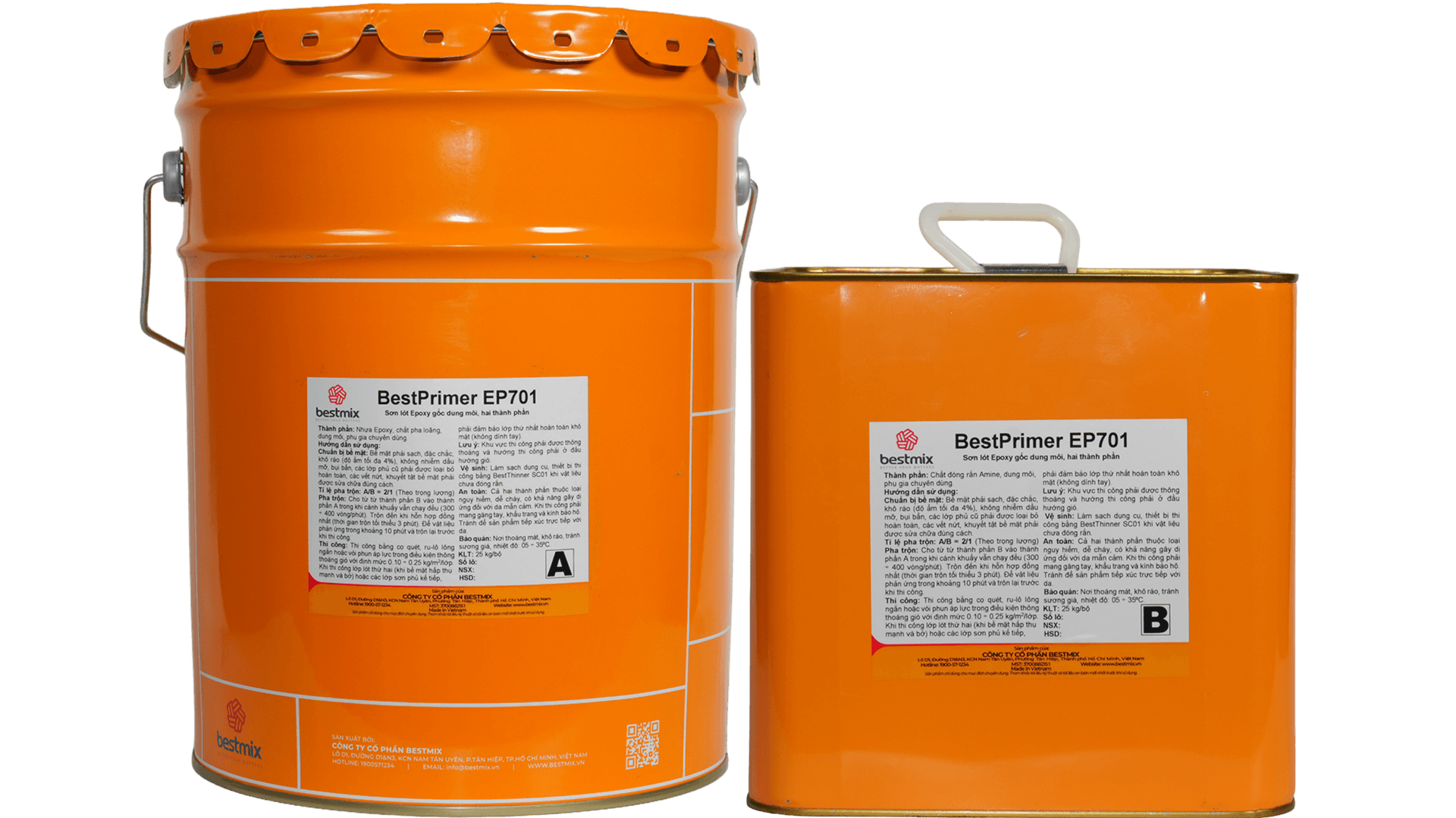
Assess strength, flatness, cracking and moisture using a method suitable for concrete slabs; select BestPrimer EP701, EP702 or EP703 for the substrate condition under the current TDS.
- 2
Grind & profile the surface
Grind flat (with dust extraction), shot-blast the whole floor to a profile, then vacuum thoroughly.
- 3
Apply the appropriate primer
Apply the selected epoxy primer under its TDS, achieving complete coverage and correcting unevenly absorbent areas before EP709.
- 4
Apply self-levelling EP709
Mix all three components at A:B:C = 3:1:9 and apply about 1.8 kg/m² per mm thickness, for example about 5.4 kg/m² at 3 mm.
- 5
Inspect, protect and open to service
Inspect and rectify defects under the approved method. Depending on temperature, foot traffic is about 20–30 hours, light mechanical exposure about 2–5 days and full cure about 7–10 days; open to loads only under the TDS and design.
EP701 primer 0.2–0.25 kg/m² + EP709 self-levelling ~5.4 kg/m² (3mm). Varies with substrate flatness and porosity.
Common questions
How much load can a factory epoxy floor take?
Capacity depends on the complete slab structure, coating thickness, wheel loads and service conditions; it cannot be represented by one generic load figure. Design for the actual traffic and open only after the system reaches the required cure.
How much epoxy does a floor need?
Primer 0.2–0.25 kg/m² and self-levelling ~5.4 kg/m² for 3mm. The flatter and less porous the slab, the more stable the consumption.
Why must slab moisture be tested?
Moisture beyond the selected primer limit can cause blistering or delamination. Test with a method suitable for concrete slabs, compare the result with the primer TDS and verify the under-slab vapour-control system.
Need advice for your project?
Bestmix engineers help you choose the right system and consumption — free of charge.