Industrial flooring
Polished concrete flooring
Combines the BestHard LS110 lithium-silicate hardener with the BestSlick G85 gloss coat to grind, harden and dust-proof the concrete floor surface.
Public technical guidance
This page is selection and sequencing guidance, not a project method statement. The current product TDS, approved design, site assessment and trial application take precedence; structural anchors, cracks, water-retaining structures and other safety-critical work require qualified technical review.
Applicable for
- Industrial factory floors
- Warehouses
- Garages and parking lots
- Areas requiring high abrasion resistance and dust-proofing for concrete surfaces
Bestmix material system
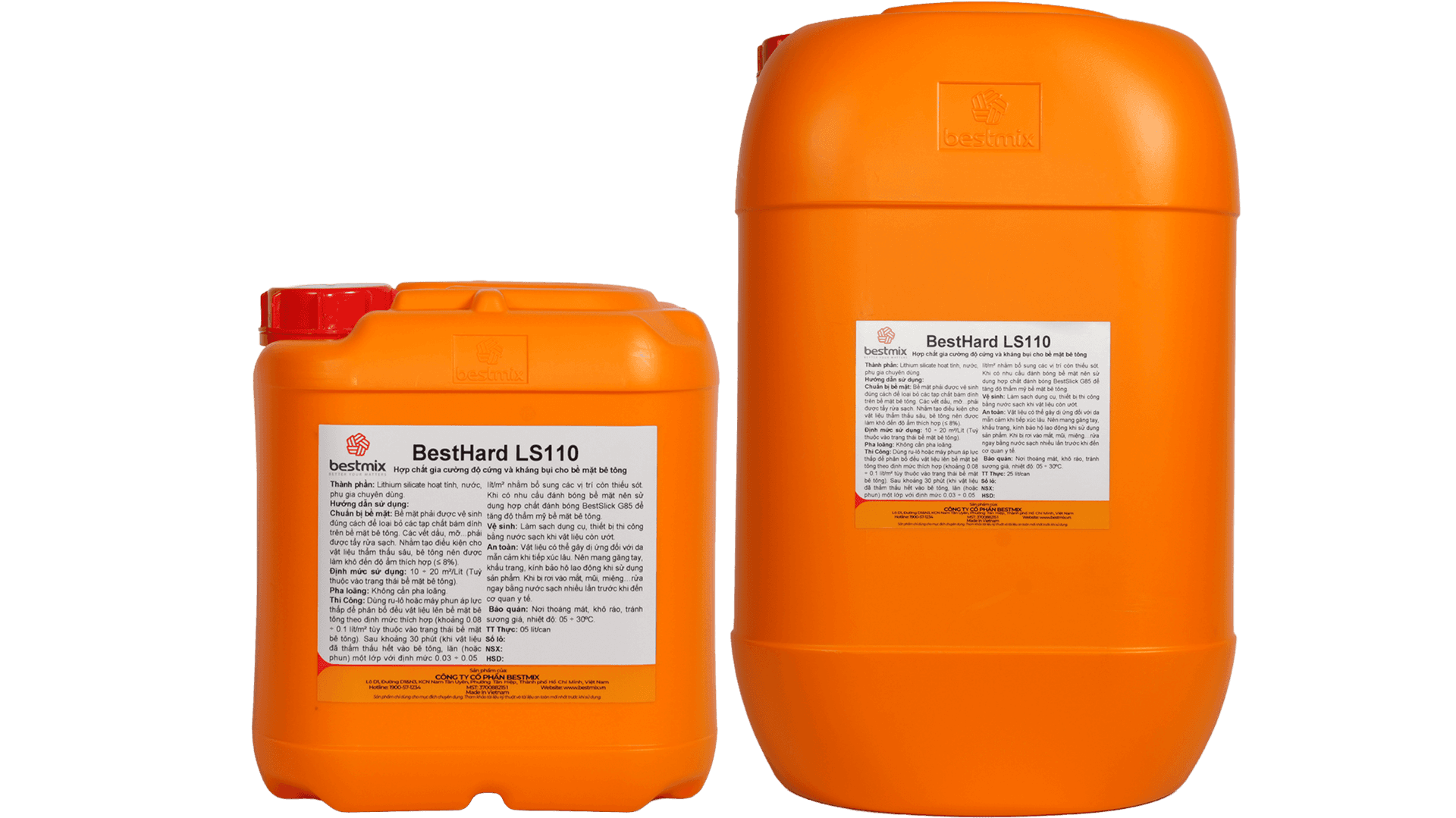
BestHard LS110
Active lithium-silicate compound that hardens the surface and dust-proofs the concrete.
Consumption: About 0.08 – 0.10 L/m² (top-up 0.03 – 0.05 L/m²)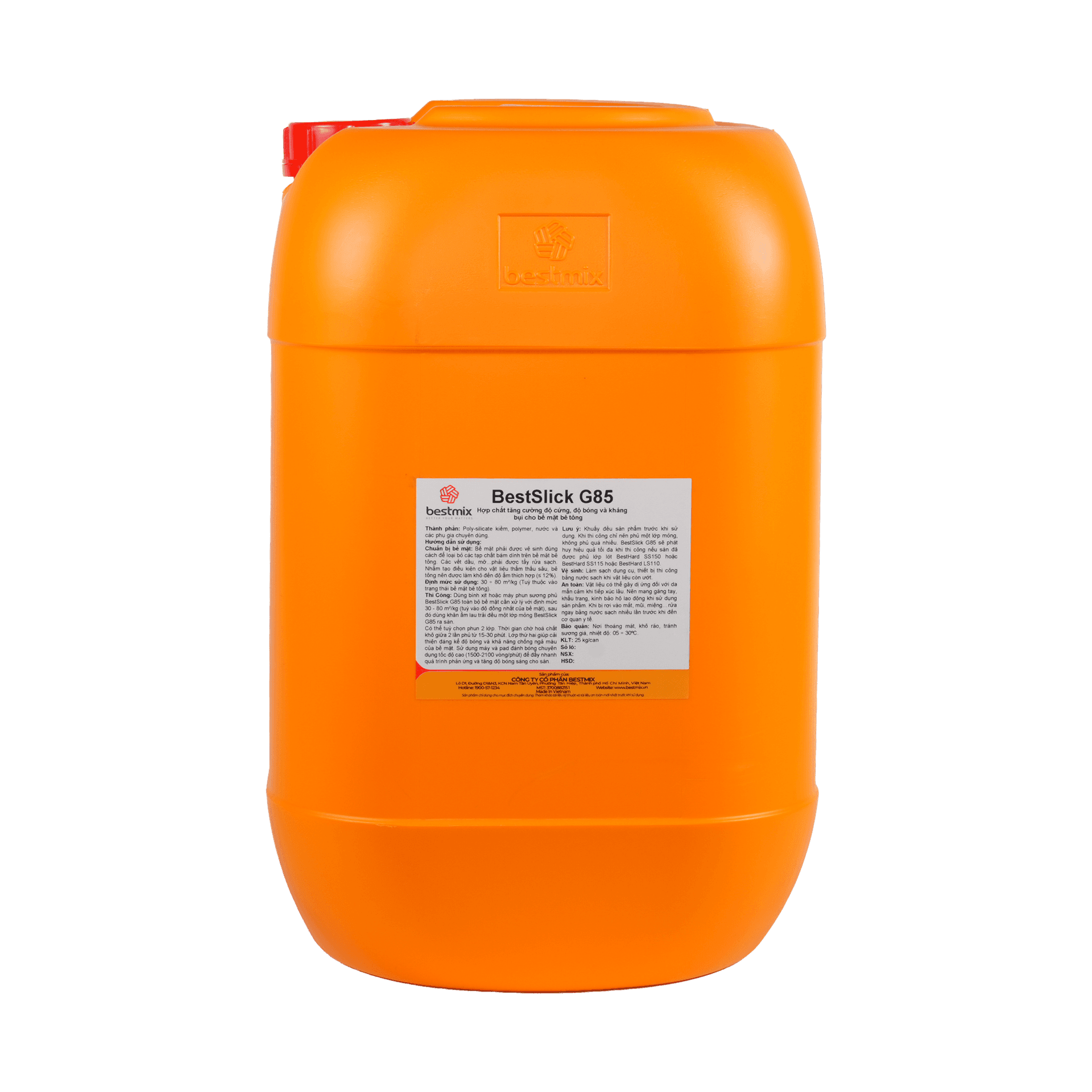
BestSlick G85
Compound that boosts hardness, gloss and dust resistance of the concrete surface.
Consumption: First coat 40 – 80 m²/kg; optional second 80 – 100 m²/kgSubstrate requirements
- The floor surface must be trowelled flat by a power trowel and match the design level.
- Concrete must be cured at least 28 days, with a tensile strength of at least 1.5 MPa and a compressive strength suited to the real service load.
- All cracks, damage and surface defects must be treated and repaired properly (using BestBond, BestRepair).
- Assess high/low spots, foot marks and trowel-blade marks to choose the best application plan.
- Fully grind off any cement mortar patches, spilled concrete, old epoxy coatings, adhesive layers or other chemicals on the surface.
Step-by-step procedure
- 1
Rough grinding (50 grit)
Use a dedicated grinder to rough-grind and clean the concrete surface with a 50-grit disc.
- 2
Scratch removal (100–200 grit)
Continue grinding with the dedicated grinder using 100- and 200-grit discs to remove surface scratches.
- 3
Apply BestHard LS110
Use a roller or low-pressure sprayer to evenly distribute BestHard LS110 at about 0.08 – 0.10 L/m² depending on the concrete condition. After about 30 minutes, once the material has fully penetrated, roll or spray a top-up layer of 0.03 – 0.05 L/m² over any missed spots.
- 4
Coarse polishing (400–800 grit)
12 – 24 hours after applying BestHard LS110, polish the floor with a polisher fitted with 400- and 800-grit discs.
- 5
Fine polishing (1500 grit)
Use a high-speed polisher fitted with a 1500-grit disc, optionally combined with a pad, to achieve the desired aesthetic and gloss.
- 6
BestSlick G85 gloss coat
After polishing, mist BestSlick G85 at 40 – 80 m²/kg and spread it evenly with a floor mop. An optional second coat may be applied at 80 – 100 m²/kg after the first dries. High-speed burnish under the TDS and protect from water, coverings and traffic for the first 24 hours.
BestHard LS110 at about 0.08 – 0.10 L/m² with a 0.03 – 0.05 L/m² top-up where required; BestSlick G85 first coat 40 – 80 m²/kg and optional second coat 80 – 100 m²/kg.
Common questions
Which materials are used to polish a concrete floor?
The procedure uses BestHard LS110 — a lithium-silicate hardener that strengthens the surface — together with BestSlick G85 as a gloss and dust-proofing top coat. It is a complementary solution to the HardRock floor-hardener line.
What is the material consumption?
BestHard LS110 at about 0.08 – 0.10 L/m² with a 0.03 – 0.05 L/m² top-up where needed; BestSlick G85 first coat at 40 – 80 m²/kg and optional second at 80 – 100 m²/kg.
How long after application can the floor be walked on and used?
The roughly 30-minute walk-on time applies only after the final BestSlick G85 coat has dried under actual conditions. Restrict traffic and avoid water or plastic covering for 24 hours; do not clean the floor for 7 days.
Need advice for your project?
Bestmix engineers help you choose the right system and consumption — free of charge.