Industrial flooring
Cement self-levelling floor screed
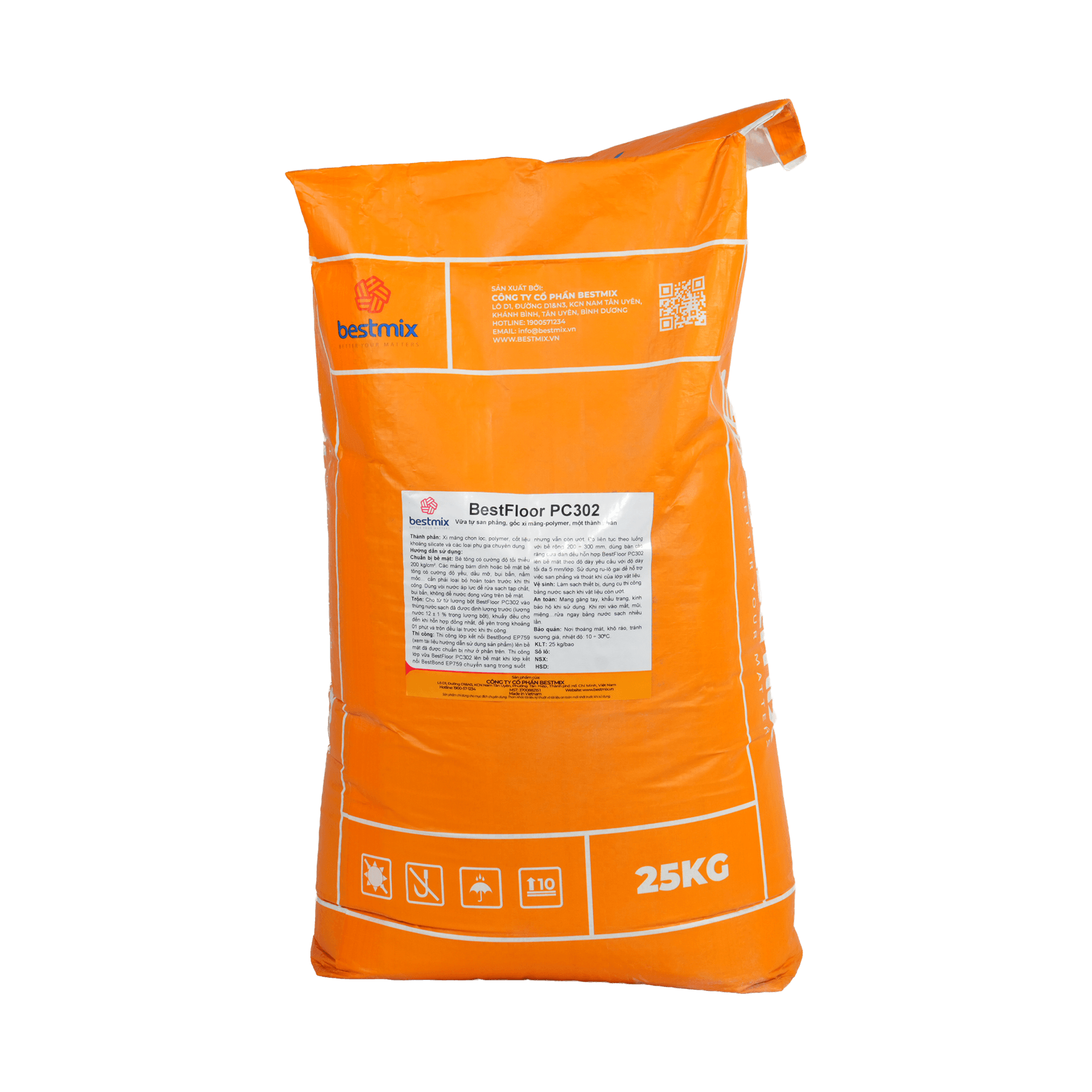
A one-part modified cement-polymer self-levelling screed, applied over a BestBond EP759 epoxy bonding coat to create a smooth, flat floor for light-to-medium load areas.
Public technical guidance
This page is selection and sequencing guidance, not a project method statement. The current product TDS, approved design, site assessment and trial application take precedence; structural anchors, cracks, water-retaining structures and other safety-critical work require qualified technical review.
Applicable for
- Repairing and reconstructing floor surfaces damaged by chemical attack, impact or mechanical abrasion during service.
- Restoring the flatness of floors before laying PVC tiles, carpet or specialised finish coatings on top.
- Concrete floors under light-to-medium loads such as factory floors, laboratories, clean rooms, hospitals, car parks, swimming pool bottoms and water tanks.

Substrate requirements
- The concrete floor must reach a minimum compressive strength of 20 MPa and a minimum tensile strength of 1.5 MPa, and suit the actual service loads.
- Fully remove any loose patches or weak concrete by mechanical means.
- Thoroughly clean off all oil and grease stains using the correct method.
- Treat, repair and patch cracks, voids and defective spots as required.
Step-by-step procedure
- 1
Surface preparation and profiling
Grind the whole concrete floor to a preliminary level with a dust-extracting grinder, then shot-blast the entire surface to create a rough profile and vacuum-clean it thoroughly with an industrial dust extractor.
- 2
Apply the bonding coat
Using a roller (or a pressure sprayer), apply the BestBond EP759 bonding coat over the entire concrete surface at an average rate of 0.2 – 0.25 kg/m² (depending on surface condition).
- 3
Pour the self-levelling screed
Mix BestFloor PC302 with about 12% water by powder weight (approximately 3 L per 25 kg bag) at no more than 400 rpm for about 5 minutes. While EP759 is translucent but still wet, apply PC302 at 2–5 mm per layer; consumption is about 1.95 kg/m²/mm, or 5.85 kg/m² at 3 mm.
- 4
Curing
Protect the screed from direct sunlight and harsh weather; cure the layer within 24 hours after placement using water, damp burlap or a plastic sheet cover.
- 5
Inspect and touch up
24 hours after placing the self-levelling screed, inspect the whole surface and repair or touch up any damaged or non-conforming areas if present.
Overall consumption: about 0.2 – 0.25 kg/m² of BestBond EP759 bonding coat plus about 5.85 kg of dry BestFloor PC302 powder per m² for a 3 mm thickness.
Common questions
Which product should I use to self-level a 3 mm concrete floor?
Use BestFloor PC302, a one-part cement-polymer self-levelling mortar, applied over a BestBond EP759 epoxy bonding coat for strong adhesion to the concrete.
What is the material consumption for a 3 mm self-levelling layer?
About 5.85 kg of dry BestFloor PC302 powder per m² at 3 mm thickness, plus 0.2 – 0.25 kg/m² of BestBond EP759 bonding coat.
How long before the floor can be checked and put into use?
Cure the screed for 24 hours; after 24 hours inspect the whole surface and touch up any defective spots before applying finishes or opening it to traffic.
Need advice for your project?
Bestmix engineers help you choose the right system and consumption — free of charge.