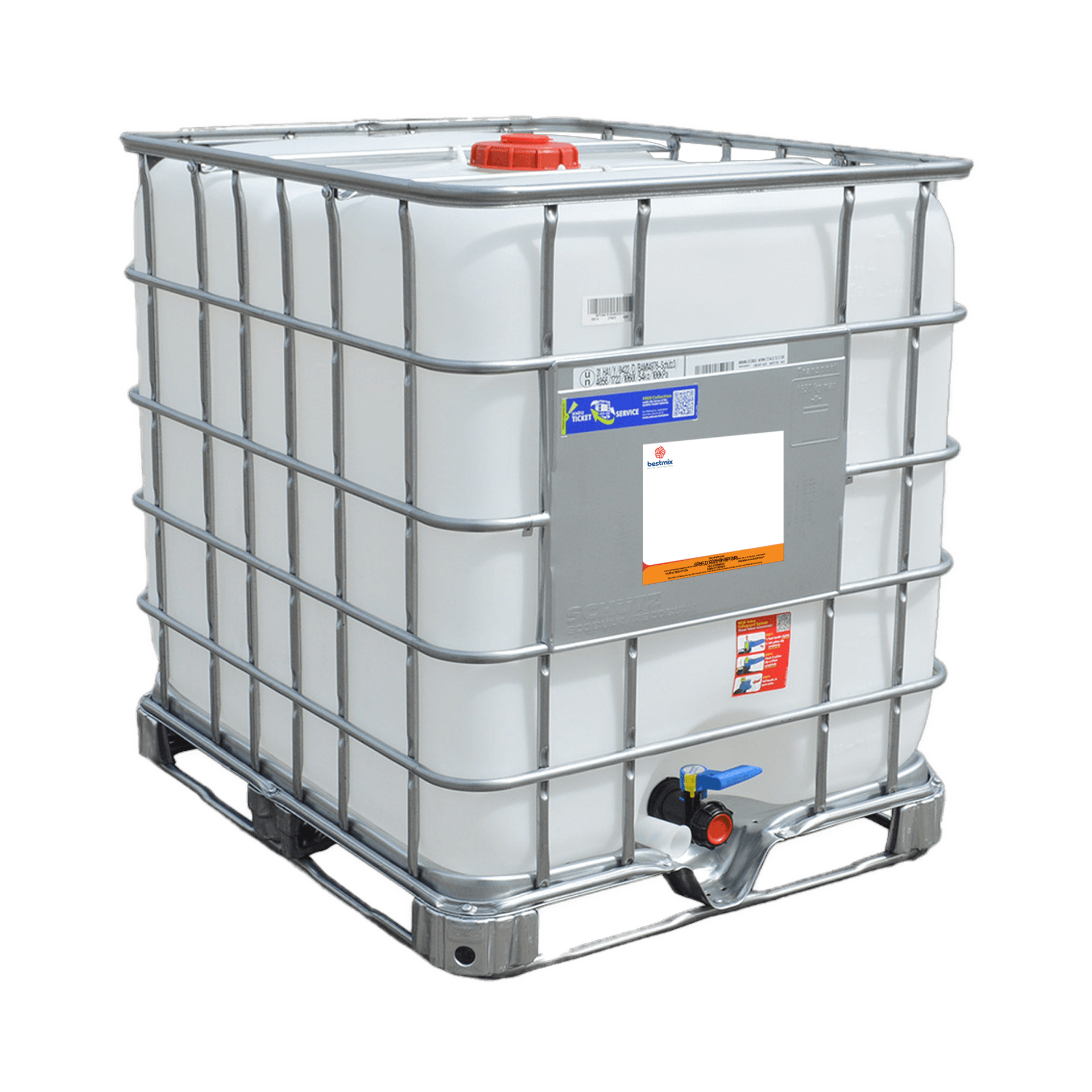
BestSeal PS550
A concentrated waterproofing compound based on modified Potassium Methyl Siliconate
Advantages:
High penetration capability.
Fast-acting and long-lasting performance.
Stable quality with high economic efficiency.
Allows water vapor transmission and does not form a surface film, therefore preventing peeling, blistering, and minimizing moss and mold growth.
Does not alter the color or visual appearance of the substrate surface.
Widely applicable to various types of materials.
Simple and easy to use, odorless, non-toxic, environmentally friendly.
BestSeal PS550
Technical summary
Category
Waterproofing & Fillings
A concentrated waterproofing compound based on modified Potassium Methyl Siliconate
BestSeal PS550 is a concentrated waterproofing compound based on modified Potassium Methyl Siliconate, water-based, highly active, and fast-acting, including on neutral substrate surfaces such as ceramics and fired clay...
When BestSeal PS550 penetrates into the substrate, it forms an invisible multi-bonded Methyl Siliconate polymer film on the surface of capillaries, pores... within the material, creating a highly water-repellent lotus-leaf effect. Water molecules cannot penetrate from the outside, while water vapor can still escape from the inside through pores, capillaries, or microcracks without altering the visual appearance of the substrate surface.
Technical documents
Product data
| Composition | Modified Potassium Methyl Siliconate |
|---|---|
| Appearance | Transparent liquid |
| Consumption | Diluted solution: 10 m²/Liter/coat (for substrates with average water absorption) |
| Dilution | Depending on surface condition, substrate porosity, and required waterproofing performance, BestSeal PS550 may be diluted with 4 to 12 parts (by weight) of clean water for every 1 part of BestSeal PS550. |
| Packaging | 1400 kg/IBC tank or upon request. |
| Storage | Store in a cool, dry place away from direct sunlight at ambient temperatures between 5°C - 35°C. |
| Shelf life | 06 months from date of manufacture. |
Applications
BestSeal PS550 is specifically designed for waterproofing most acidic, neutral, or alkaline materials:
Ceramic and low-fired clay surfaces...
Concrete, lightweight concrete, autoclaved mortar, plaster mortar... made from cement, gypsum...
Natural wood, engineered plywood...
Natural stone, artificial stone surfaces...
Advantages
High penetration capability.
Fast-acting and long-lasting performance.
Stable quality with high economic efficiency.
Allows water vapor transmission and does not form a surface film, therefore preventing peeling, blistering, and minimizing moss and mold growth.
Does not alter the color or visual appearance of the substrate surface.
Widely applicable to various types of materials.
Simple and easy to use, odorless, non-toxic, environmentally friendly.
Application instruction
SURFACE PREPARATION:
The surface to be waterproofed must be dry, clean, and free from dust, moss, grease, oil, or old materials with poor adhesion or materials that may obstruct substrate penetration.
APPLICATION PROCEDURE:
Dilution:
Pour the required amount of clean water into a clean container of suitable capacity, then slowly add the corresponding amount of BestSeal PS550 (4 to 12 parts) while the mixing paddle is rotating. Mix until a homogeneous solution is achieved (approximately 3 minutes).
Diluted BestSeal PS550 should be used as soon as possible (maximum within 7 days).
Application:
Use a brush, roller, low-pressure spray equipment (or direct immersion into the solution) to apply one coat of BestSeal PS550. For vertical surfaces (walls), apply from bottom to top so that the material flows downward in streaks approximately 200 ÷ 250 mm long. Depending on the substrate structure, site conditions, and available equipment, select the most suitable application method.
Depending on the water absorption rate (or porosity) of the substrate, the soaking time and coverage rate may vary to achieve the desired penetration depth of BestSeal PS550.
BestSeal PS550 should only be applied once. Preliminary testing should be conducted for each type of substrate to determine the appropriate consumption rate.
BestSeal PS550 reacts and bonds with compounds on the surface, within pores, capillaries, and microcracks of the substrate, forming a transparent, colorless, highly water-repellent film.
BestSeal PS550 becomes water-resistant after 24 hours once the substrate is completely dry and achieves optimal waterproofing performance after drying for at least 14 days from the time of application.
BestSeal PS550 must not be applied during rain unless adequate shelter is provided.
Notes:
BestSeal PS550 is recommended only for final finished surfaces.
BestSeal PS550 may reduce the adhesion of future water-based bonding materials applied over the treated surface.
Stir thoroughly before use.
Seal the container tightly immediately after use.
CLEANING:
Clean tools and equipment immediately after completion using clean water and soap.
SAFETY INSTRUCTIONS:
BestSeal PS550 is an alkaline solution and may severely irritate skin (even when diluted). Gloves, masks, and safety goggles must be worn during use.
In case of contact with skin, eyes, nose, or mouth, rinse immediately several times with clean water and seek medical attention at the nearest healthcare facility for timely and proper treatment.
BestSeal PS550 is a concentrated waterproofing compound based on modified Potassium Methyl Siliconate, water-based, highly active, and fast-acting, including on neutral substrate surfaces such as ceramics and fired clay...
When BestSeal PS550 penetrates into the substrate, it forms an invisible multi-bonded Methyl Siliconate polymer film on the surface of capillaries, pores... within the material, creating a highly water-repellent lotus-leaf effect. Water molecules cannot penetrate from the outside, while water vapor can still escape from the inside through pores, capillaries, or microcracks without altering the visual appearance of the substrate surface.